Wednesday, February 25, 2015

Biodiversity


"Humankind is one among millions of other species. It does not have a right to push other species to extinction, or to manipulate them for greed, profit and power without concern for their wellbeing." (Shiva, 40)

I think humans have a sense of dominance in the world that makes us feel like the alpha species. We have taken up most of the useable land for civilization and have destroyed many ecosystems along the way. I agree that humans have led to the endangerment or extinction of many plants and animal species that were once prevalent on Earth. Just because we are the largest species on the planet doesn't give us the right to infringe on the lifestyle of other living organisms. They were here centuries before the beginning of the human race. As a society, humans need to learn how to live in equilibrium with surrounding wildlife to preserve the Earth's biodiversity. Once a species becomes extinct there is no way to bring it back. Our goal should be to prevent further animal/plant extinction because everything on Earth has a purpose.


                                                                          http://www.civilience.com/style/images/art/civilience10.jpg
"While industrial civilization uses the the gifts of biodiversity, it abuses the living richness of our world." (Shiva, 55)

Our world is focused on commercialization and monopolization as opposed to the wellbeing of our planet and its ecosystems. We attribute most of our success from the resources of the land; however, we rob the environment of its nutrients with no intent of replenishing it. When it comes time to relocating our water products, we turn to the land as a place for containment. Doing so pollutes the surrounding air and soil, which directly affects all living organisms. If we continue to abuse our resources the thriving biodiversity that took centuries to develop will be destroyed.


"As biodiversity disappears, the poor are further impoverished and deprived of healthcare and nutrition that biodiversity provides." (Shiva, 50)

I think the quote takes on too much of a hasty generalization in terms of biodiversity and the poor. I can see how a lack of biodiversity can make some resources harder to attain, however, I don't believe it is the root cause of poverty. Healthcare is also something that only minimally ties into biodiversity because most of the drugs used in society are synthetic as opposed to natural remedies. A reduction in biodiversity can make it harder to cultivate health remediation plants, but there are plenty of alternatives that are widely accessible.


"The emerging trends in global trade and technology work inherently against justice and ecological sustainability." (Shiva, 56)

Since this text was published in the year 2000, I think that over the course of a decade our ideology on sustainability has greatly changed. The current trend in society is taking an eco-friendly approach geared towards slowly reducing our dependence on non-efficient energy sources. As a nation, we have come to the realization that our actions on this Earth have dramatically altered the environment in a negative way. New technology and higher government standards on efficiency are helping to reduce our carbon footprint. Given the circumstances, immediate change will not be observed because the Earth has endured centuries of human destruction that will take decades to overcome.


Wednesday, February 18, 2015

Silent Spring

                                                               http://www.thecanadiandaily.ca/wp-content/uploads/2013/06/earth-660.jpg
"The most alarming of all man's assaults upon the environment is the contamination of air, earth, rivers, and seas with dangerous and even lethal materials." (Carson, 153)

I agree with this quote because most of the pollution that results from urbanization leads to contaminating air and water. Carbon emissions from factories and vehicles contribute to smog and  acid rain, which deplete the Earth's ozone layer and poison the atmosphere. Contaminated air affects all living organism on Earth, not just humans. Plants too are affected by fossil fuel byproducts and they serve as an indicator of how healthy the atmosphere is. When trees and plants begin to die, there is definitely something wrong with the surrounding environment. The use of pesticides allow toxic chemicals to enter our waterways in the form of runoff, which can lead to health risks and red tide. 


"To adjust these chemicals would require time on the scale that is nature's: it would require not merely the years of a man's life but the life of generations." (Carson, 154)

If the entire world were to start from scratch and eliminate the use of non efficient resources, the Earth would not show immediate signs of improvement. It took two thousand years for the accumulation of pollutants on Earth to occur so it should take at least double the amount of time for the Earth to recuperate and begin to flourish. Although present day civilization will not be able to observe the overall effect of living more environmentally friendly, future generations will be able to appreciate the impact of a cleaner environment. 


As Albert Schweitzer has said, "Man can hardly even recognize the evils of his own creation." (Carson, 154)

I don't believe that humans aren't aware of their poor sustainability habits. Many people feel like it's easier to look in the opposite direction instead of having to face an issue. I think that we as citizens are able to recognize our destructive behavior and the negative impact it has on on our environment. We simply choose to ignore the effects of our wreckage and try and find an excuse to condone our behavior. Many people also believe that their individual actions have no effect on the greater society, which is not true. What everyone needs to do is come together and work towards creating a long-term solution. 


"We train ecologists in our universities and even employ them in our governmental agencies but we seldom take their advice." (Carson, 159)

I disagree with this claim because I like to believe that higher education and research help create well-rounded professionals who care about the success of the greater population. As citizens, we tend to be fascinated by new technologies and have a great respect for science within society. In terms of ecologists, the government is extremely selective when it comes to creating collaborative groups of scientists to research and analyze current environmental issues. Credentials and experience are taken into consideration as with any professional occupation. For many years scientists have explained the risk of climate change and advocated for better alternative energy sources and materials. These messages have not gone unnoticed, the only obstacle is getting support from the population to implement change. People are very much influenced by scientist, however, they fear change when it directly affects their daily routine. 


Wednesday, February 11, 2015

Nature of the Everglades

                                                                   http://www.baphoto.no/Galleri/Galleri1/Everglades_Storm_Scaled.jpg
"Then the marching wet will start again the next day or so, hissing and leaping down in narrow sharply defined paths as the clouds are pushed about here and there in the bright sky." (Douglas, 114)

I found this sentence extremely vivid and almost story-like. It painted a clear image of a stormy afternoon over the vast wetlands of the Everglades. Douglas included strong adjectives like "hissing" and "marching" that made the rain appear powerful and mighty. As a native Floridian, I have grown accustomed to the frequent storms that prevail during the wet season. I admit that sometimes the rain can fall like heavy white sheets leaving the surrounding areas flooded with reduced visibility. During the wet season it rains almost everyday, sometimes even more frequent. With regards to the Everglades, the wetlands depend on the rain from the wet season to provide water for the inhabitants of the surrounding ecosystem.


                                                          https://mylovemood.files.wordpress.com/2010/07/3723309630_68290555b2_b.jpg
"The whole system was like a set of scales on which forces of the seasons, of the sun and the rains, the winds, the hurricanes, and the dewfalls, were balanced so that the life of the vast grass and all its encompassed and neighbor forms were kept secure." (Douglas, 121)

This sentence made me reanalyze the natural elements and put them into play with the conditions of the Everglades. One of the most important organisms that are prevalent throughout the Everglades is saw grass. This species of grass proliferates in the wetlands and is used by many other animals in the surrounding ecosystem as food or shelter. Too much sun can dehydrate the grass and cause it to dry. Too much rain can flood the surrounding plains and reduce dry lands. Too much wind can rip up the grass and blow down tress. In order for the Everglades to be a successful ecosystem, there needs to be a balance between the natural elements and living organisms.


                                                          http://www.earthtimes.org/newsimage/from-garbage-tip-wildlife-haven_223.jpg
"Where the grass and the water are there is the heart, the current, the meaning of the Everglades."(Douglas, 108)

Most of the inhabitants of the Everglades survive on the grass and/or the water. They either use it as a source of nutrition or as a form of shelter. This sentence reaffirms the importance of both water and grass in terms of useful resources for the Everglades. The "heart" of the Everglades is where both resources can flourish and supply their nutrients to the surrounding environment. The survival of the Everglades depends on the sustainability of the saw grass and water supply. If one of these resources break equilibrium, the result affects the entire ecosystem and can take years to fix.


                                                              http://blogs.ei.columbia.edu/wp-content/uploads/2009/03/picture-11.png
"Time moves again for the Everglades, not in ages and in centuries, but as man knows it, in hours and days, the small events of his own lifetime, who was among the last living forms to invade its shores." (Douglas, 134)

This sentence was eye opening in that it illustrated how human civilization has swarmed the Everglades and forced it to the southernmost tip of Florida. The Everglades used to be a large thriving  ecosystem encompassing around one fourth of the state of Florida. Now, the Everglades is receding to a smaller area due to the proximity of surrounding civilization. As humans, we measure change in terms of hours and days like Douglas mentioned. However, the Everglades have been established for centuries before mankind. It has survived the dramatic changes of the Earth, but it appears as though humans are beginning to suffocate the rich environment of the Everglades.


Wednesday, February 4, 2015

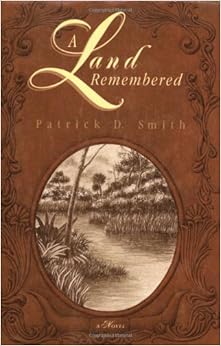
A Land Remembered

                                                            
                                                             http://ecx.images-amazon.com/images/I/51QnbTHerEL._SY344_BO1,204,203,200_.jpg 
 Briefly describe who the character is and their role in the novel
Through reading this novel, I was able to put myself into the shoes of one notable character, Tobias MacIvey. Tobias was a middle aged man who traveled from Georgia in 1858 to Florida because of the War. He was accompanied by his wife Emma and their six year old son Zech. The MacIvey family created settlement in an oak hammock up near Gainesville, FL. Tobias chose to live in the woods to seek refuge from the ongoing War between the Federal and Confederate Armies. He built a cabin, a smokehouse, and a barn in a little over a year. Tobias was an experienced farmer in Georgia, however, the Florida soil proved to be a challenge with cultivating crops. Tobias relied heavily on his axe and shot gun to provide meat (squirrel, deer, coon, and beef) for his family. Tobias played a beneficial role in this book because he lived one with the land and taught his family to appreciate it for its value. Tobias was also a very humble man who put others first. He saved two seminole indians named Keith and Bird, saved Skillit, and offered jobs to Frog and Bonzo. Tobias exemplified a man with great character who had a passion for welcoming people with open arms.


                                               http://prairieview.mustangps.org/Portals/Mustang/Prairieview/images/Prairie-Canada.jpg?dummy=19
What is the relationship between the character and their environment and the natural world?
Tobias referred to the Land as a gift from God. He once stated, "The Lord put it here for everyone to use." While traveling to Punta Rasa, Zech asked Tobias why people haven't purchased the vast land on the prairie or fenced it. Tobias was quick to reply that no one should ever be allowed to fence such a majestic piece of land. Tobias relied heavily on the land because it served as shelter, food, and water. His livestock was also dependent on the resources of the land because the MacIvey family did not have excess corn or water to supply the herd. The trees were used as shade from the penetrating sun, the heart of palm was food, and the leaves were bedding. Tobias and his family survived in the middle of no where and used the land as a primary resource. The appreciation Tobias had for the land was evident in his words and actions.  

                                              http://manausa.wpengine.netdna-cdn.com/wp-content/uploads/2010/09/Cowboy-Herding-Cattle.png
Where does this character experience a strong sense of place and what legacy will/did they leave behind for others?
Tobias experienced a strong sense of place on the prairie trails where he and his family herded wild cattle across the land to Punta Rasa. During this endeavor, Tobias was able to appreciate the characteristics of the land and its surrounding environment. He payed attention to the fast changing weather and the wild animals. He was able to spend time to himself and think about the world, his family, and his future. It was during this journey that Tobias's love and appreciation for Emma grew. The MacIvey family also appreciated Tobias's efforts and they knew that his best interest was to create a better future for each of them. The sacrifices that Tobias endured helped shape a legacy for Emma, Zech, and even Skillit. Emma learned to become independent, strong, and selfless. Zech developed into a strong young man with a good sense of nature, and Skillit gained the love and experience of a true family.


                                                               http://srisrimiracles.com/wp-content/uploads/2013/10/strength-inline.jpg
How do you relate to this character?
I think Tobias and I share the same quality of putting others before ourself. Many times I find myself in situations that do not directly benefit me, however, it benefits those around me and that helps me feel useful. Tobias was also an amazing role model to Zech, but also to everyone he came in contact with. I hope that in the future I can also take on that responsibility of being a mentor and use it to instill good values in others. In Tobias's eyes family was the center of the universe. Everything he did was to benefit his family. I too am very family oriented and understand the importance of a structured family.


Wednesday, January 28, 2015

Land Ethics

In today's society, the ethics of the land has changed from a conservational approach to a form of economic l wealth and value. The Earth and soil are viewed as tools to cultivate and make money instead of as living ecosystems that sustain life. With the idea of ethics as preserving something that is valued, understood, and loved; it is shocking to see that the environment has little if any ethical value to 21st century humans.

"In short, a land ethic changes the role of Homo sapiens from conqueror of the land-community to plain member and citizen of it." (Leopold, 60)

I agree with this statement because it focuses on the fact that Homo sapiens were primarily interested in colonizing land and cultivating it to demonstrate wealth and power. The more land that one group or tribe conquorered resembled the strength of their leader. Although the mindset of many are very different from one thousand years ago, there is still little change. Today in society, we need to take a step back and focus on being environmentally cautious citizens. Instead of trying to expand as a nation and gather more property, we should be putting efforts into maintaining the land that we currently have now.

                                                           http://www.bigyield.us/wp-content/uploads/2013/10/farmland-bubble.jpg


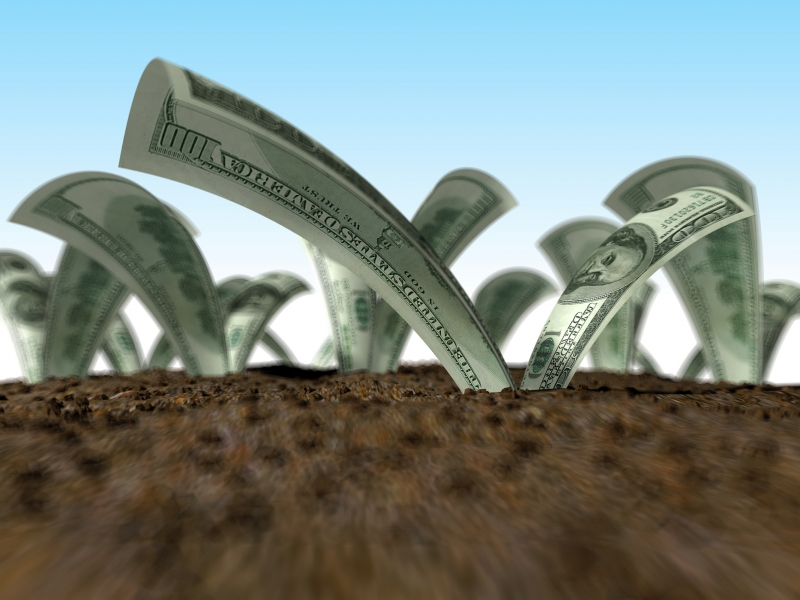
"Land-use ethics are still governed wholly by economic self-interest, just as social ethics were a century ago." (Leopold, 64)

Land is definitely viewed as an economic factor as opposed to a vital life force that recirculates nutrients and energy. Based on the readings, I agree that socially we are still stuck in the mindset of the 90's era of manufacturing. Facilities used for manufacturing require a large chunk of isolated land to store their equipment as well as products. The government is aware that no one wants to live by these facilities so they chose to develop them in the middle of nowhere. This disrupts ecosystems that were once uninhabited and causes stress to the surrounding environment. Farmers who dedicate acres of their land for the cultivation and sale of produce are also adding to the problem. As long as money is involved, the land will continue to receive a beating from humans.

                                                      http://farmlandgrab.org/uploads/images/photos/1764/original_Investment.jpg?1317314948


"In each field one group (A) regards the land as soil, and its function as commodity-production; another group (B) regards the land as a biota, and its function as something broader." (Leopold, 73)

I don't believe this issue is entirely black and white. There are some people who depend on the land for an income, however, they do their best to rejuvenate the surrounding habitat. The same goes for people who feel that land should be untouched and preserved. There needs to be middle ground when approaching this issue because both stances are too drastic.

                                                         http://www.topdreamer.com/wp-content/uploads/2013/05/Landscape-Photo-20.jpg


"In short, land is something he has outgrown."(Leopold, 76)

Land is not something that the human race has "outgrown" because it's a key element in the survival of the entire species. There is plenty of land that is available, the matter is whether or not to preserve or disturb. Land preservation is important because it creates a protected environment for many species of plants and animals. In terms of use, I feel that society has been wasteful when it comes to demographics and creating housing/shopping complexes. Large property homes and three story shopping malls are not a necessity in terms of living a happy life. Both humans and nature can coexist  in a way that benefits each group.

                                                             http://img.timeinc.net/time/photoessays/2008/dustbowl/dustbowl_01.jpg

Wednesday, January 21, 2015

Nature's Ritalin

Who would have thought that one of the worlds most prevalent childhood disease can be cured by nature? Before reading this except I was skeptical as to how nature could heal a cognitive disease involving the brain and nervous system. The chemical imbalance in charge of firing off neural impulses is something that can only be fixed with medications like Ritalin, or so I thought. After reading this excerpt by Richard Lou and learning about the substantial research behind this movement, I have gained a better understanding about the relationship between nature and urban life.

"Some of the uninformed public tends to believe that poor parenting and other social factors produce the immature behavior associated with ADHD, but ADHD is now considered by many researchers to be an organic disorder associated with differences in the brain morphology of children." (Louv, 3)

I agree that a lot of people choose to blame parents when children experience behavioral problems associated with ADHD. This quote highlights the ignorance that some parts of society still hold on to and focuses on the scientific background of the disease in itself. Every child is unique in personality, attitude, growth, and even development. In addition, everyone's brain develops at a different rate, is composed of a different mass, and has a different dominance. There is nothing a parent nor doctor can do to speed up the development of the brain.


"Our brains are set up for agrarian, nature-oriented existence that came into focus five thousand years ago." (Gurian, 5)

I wouldn't exactly say that the human brain is automatically nature-oriented because many people could care less about the outdoors or their environment. Not everyone has the same fascination or appreciation for their surrounding ecosystem. This statement is too bold to assume that all brains are hardwired the same way in regards to agrarian culture. In terms of cultivation, society has taken a drastic turn from using land to harvest food into using land for municipal growth and recreation. Less land is being preserved or recycled for crops as it was hundreds of years ago. I do believe, however, that as human beings we have a relationship with nature; I just don't  think it's a one size fits all approach.
                                                      https://s-media-cache-ak0.pinimg.com/236x/74/15/e6/7415e6ac2efcc11042da813f9745f32a.jpg


"Those with a window view of trees, bushes, or large lawns experienced significantly less frustration and more work enthusiasm than those employees without such views." (Louv, 6)

I completely agree that having a window with a decent view of greenery can make a boring office space ten times better. The feeling of being a room without natural lighting or any windows is cold and unpleasant. With respect to my apartment, I like that my office faces the direction of a group of large robust oak trees with yards of Spanish moss dangling from the limbs. When I find myself overwhelmed with schoolwork it's nice to be able to enjoy the scenery and relax for a little.
                               https://blogger.googleusercontent.com/img/b/R29vZ2xl/AVvXsEijk_NXEBM4bh0NOykDZ5p86s_l7ZBc3RwrN3brv9NQ2q_49-Mn7wCivmrQZl3K_7LW9t54zwKTvQocKEWG0oktVke1pZ41nJlZfo4IHc72MxB7y0JmUyNI53RlAea7eqbjV5Hcm1pGdNMJ/s1600/corner%20office.jpg


"To take nature and natural play away from children may be tantamount to withholding oxygen." (Louv, 11)

This statement is a little extreme because it is trying to make an exaggerated correlation between nature deficit and living without oxygen. If a child isn't exposed to nature at a young age, that doesn't mean he/she will not survive. There are plenty of people who choose to stay inside and play video games or watch television instead of enjoying the outdoors. This may not be the best choice when it comes to raising a child but it certainly isn't a matter of life or death. In regards to ADHD, going outdoors isn't a proven form of prevention. To my recollection, people who are not environmentally cautious or eco friendly are still healthy living members of society. I do believe that getting involved with nature at an early age is a great experience, however, I just don't think it's as great of a necessity as is oxygen.
                                                                          http://getwellhere.com/wp-content/uploads/2013/11/asthma.jpg

Wednesday, January 14, 2015

Biophilia vs Biophobia

In today's society we have come to overwhelm ourselves with technology, city life, and urban trends. We choose to prioritize our selfish wants and needs over the importance of our environment. As a result, many have gained a sense of biophobia, which is a culturally developed form of isolation with nature. This ideology causes people to forget about the world as a living ecosystem and only focus on personal development or success. As inhabitants on this Earth, it is our fault that the natural environment is struggling. Our constant wants for shopping plazas, theme parks, and housing complexes take a large toll on the surrounding natural habitat.

One quote that I found during the reading that caused me to rethink was " The manifestation of biophobia, explicit in the urge to control nature, has led to a world in which it is becoming easier to be biophobic." ( Orr, 190)

I agree that living in a society where the norm is to be economically successful directly affects the environment. A lot of it has to do with the way people are raised. People who grow up in the city tend to stay in the city and pursue their careers there. Being environmentally cautious can be hard when you live in the city because there's only so much one can do. Many people find it easier to be carefree in regards to the environment and continue polluting because that's how they were raised. Also, it can sometimes be more expensive when choosing to be environmentally friendly. "Green" products are more expensive, which makes it harder for others to contribute.
 
http://fc07.deviantart.net/fs70/f/2012/120/2/b/hourglass_global_pollution_by_simonebasi-d4y1po7.png


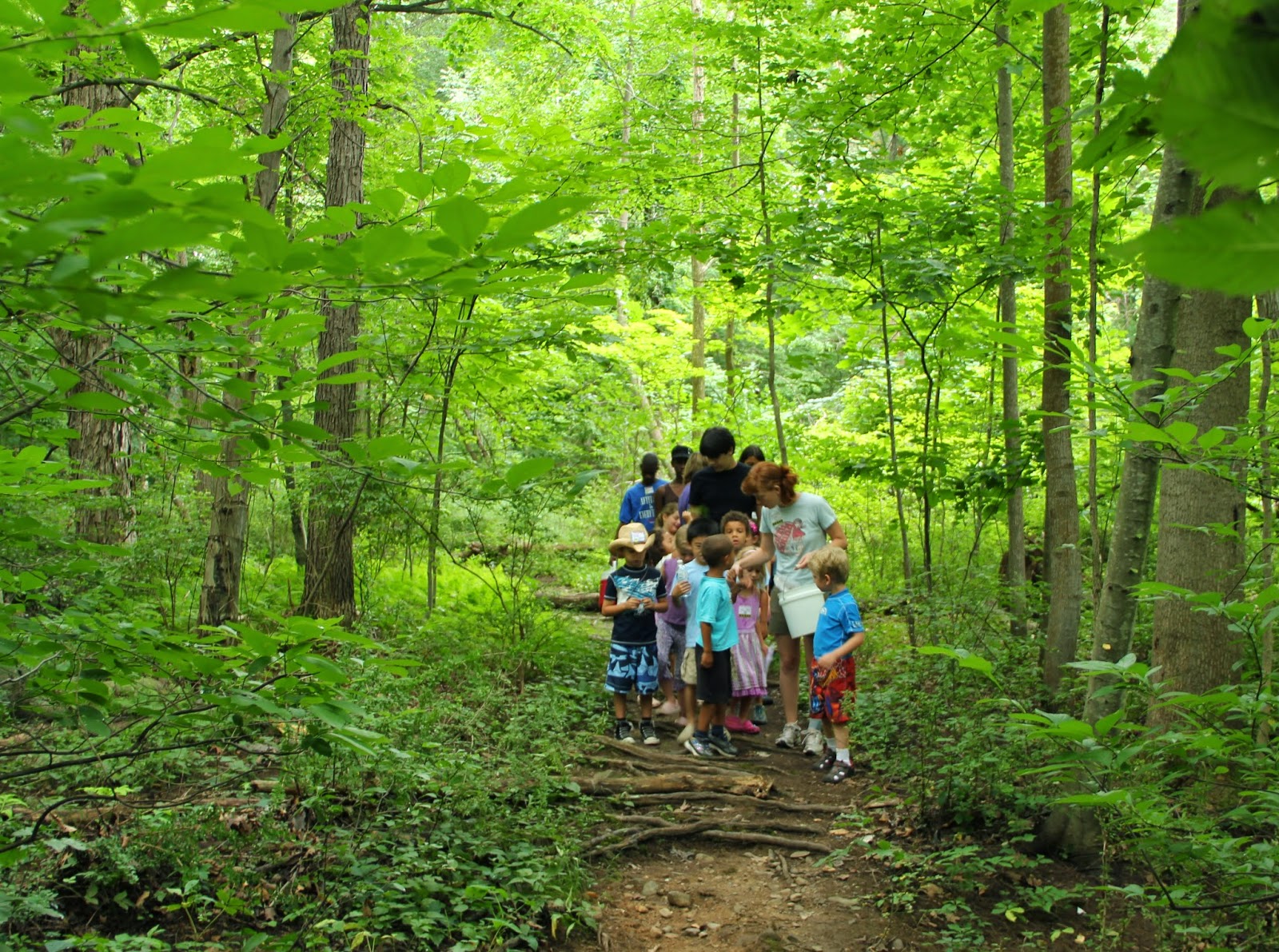
"Third, I think we can safely surmise that biophilia, like the capacity to love, needs the help and active participation of parents, grandparents, teachers, and other caring adults." (Orr, 200)

I believe that being environmentally cautious and aware is something that everyone needs to participate in. As a child, going outdoors to parks and playgrounds were always my favorite thing to do before I grasped the desire for technology. My parents and grandparents both made the effort to make me appreciate the environment as well as understand the role that society played in order for its success. Even in school, I would go on field trips to nature preserves during middle school and I would be educated on the Florida ecosystems as well as animals that reside here. Having this experience as a child defiantly helped me to better appreciate my surroundings.  For this reason, I think biophilia is something that can be learned to appreciate.
http://www.cityguideny.com/uploads2/121713/Walkinthewoods.JPG


"If by some fairly young age, however, nature has not been experienced as a friendly place of adventure and excitement, biophilia will not take hold as it might have." (Orr, 200)

Nature doesn't have to be experienced at a young age for people to appreciate it. There are plenty of people who grow up and work in the city yet choose to retire in a rural area because they want to escape the fast paced lifestyle. They look forward to living a relaxed life and appreciating their surroundings. There are also people who may have never really payed attention to the environment until they themselves had children and experienced as a family. Just because you weren't exposed to nature as a child doesn't mean you will lack biophilia and can't appreciate your environment. 
http://www.movieposterskey.com/postersimages/an-elderly-couple-walking-through-a-bluebell-wood-on-the-shores-of-coniston-water-united-kingdom.jpg


"Nor will the wealthy, fed and supplied by vast, complex global networks, understand the damage they cause in distant places they never see and the harm they do to people they will never know." (Orr, 201) 

I think this statement is a little too dramatic in the case of creating direct harm to others. Not to say that this will never happen, I just feel as though it's too much of a generalization. Many affluent individuals are known for their conservative efforts whether in America or overseas on another country. A few to name off the top of my head include: Angelina Jolie, Mark Zuckerberg, and Michael Bloomberg. These are examples of wealthy American citizens who choose to share large portions of their money with those who are less fortunate and otherwise unable to take proper care of themselves. They help raise money to help philanthropy organizations and help to mold small sections of the world into strong communities.
http://blog.cappex.com/blog/wp-content/uploads/2014/07/10-028-Peace-Corps.jpg